kindtv
  • Home
  • Business
  • Politics
  • Breaking
  • World
  • Entertainment
  • Sports
  • Tech

Responsive Advertisement
HomeWorld News

The idea of ‘Eurasia’ is much more viable than ‘Europe’ – here’s why

News Image

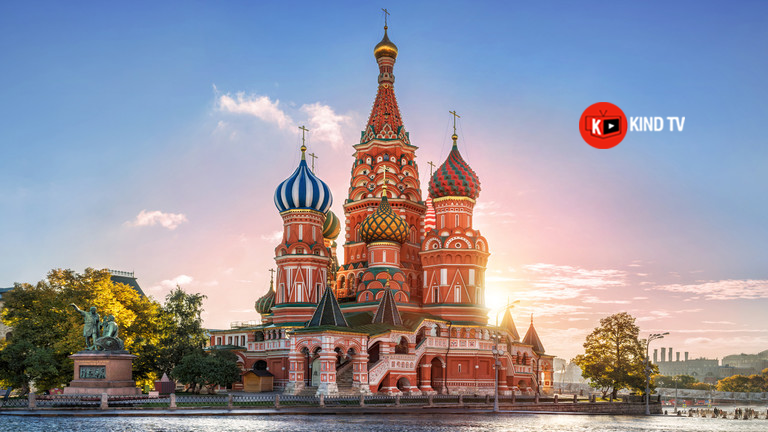
For a Eurasian state, total isolation from Western Europe is not only undesirable, it is likely impossible. For those genuinely committed to the project of a cooperative and developmental Eurasian space, the key political challenge is finding a way to manage external influences – chiefly from the NATO bloc in Europe and North America – that cannot be eliminated, even in theory. The task ahead is to mitigate the risks posed by these actors, while extracting whatever limited benefits can be found in their inevitable presence, all without allowing external pressure to provoke internal splits within Eurasia. Even as Russia strengthens its cooperation with partners to the south and east, the enduring economic and technological capacities of the EU and the US cannot be ignored. History demonstrates that relatively closed zones of cooperation emerge only under two conditions: either through total external opposition, or under the hegemony of a dominant power willing to bear the costs of leadership. Neither of these applies to Greater Eurasia. First, the states of Eurasia have no interest in detaching themselves from the global economy. Second, there is no Eurasian hegemon prepared to sacrifice its own development to dominate the continent. Third, no one is suggesting Eurasia should become an isolated bloc. The US, EU, and key Middle Eastern states will continue to play important roles in the global economy. Regardless of political hostilities, they still provide market access, technology, and trade. Some see the EU as a model of regional self-containment – a “garden,” to quote one of its more misguided recent metaphors. But even Western Europe’s famed unity has relied heavily on continued openness to the US and, to a lesser degree, China. Only with respect to Russia and the Global South has the EU pursued genuine exclusion. Even then, the strategy remains incomplete and largely rhetorical. The West’s attempt to encircle itself with legal and institutional “fences” has created a fragile enclosure, but one constantly tested by global realities. Meanwhile, Russia and its partners have been left outside this structure, prompting renewed thinking about the viability of an open Eurasia as an alternative. Could Eurasia construct a self-sufficient development community? Theoretically, yes. But unlike Europe after World War II, Eurasia lacks a single leader prepared to organise such an effort. The United States attempted something similar with its global leadership in the second half of the 20th century, but even Washington now appears exhausted by the effort. American voters have repeatedly signaled their preference for reducing overseas commitments. China, while economically formidable, is unlikely to assume a leadership role in Eurasia. Its political culture does not favour hegemonic ambitions abroad, and the risks of taking responsibility for a region this vast would likely outweigh any conceivable gains. Moreover, Russia, China, and India are roughly comparable in power and have no appetite for a zero-sum struggle to dominate the continent. The success of BRICS and the SCO underscores this reality: mutual respect, not dominance, is the basis of Eurasian cooperation. Instead of trying to copy the Western European model or isolate themselves from the West entirely, Eurasian states should seek to engage the global economy pragmatically. Sanctions against Russia, even those of unprecedented scale, have not dismantled international trade. The global economy has proved remarkably resilient. Middle-sized and smaller countries require open markets to grow; major powers like Russia, China, and India need them to deploy their immense logistical and industrial capacities. It would be unrealistic – and counterproductive – for Eurasian powers to sever links with the world economy. The real goal should be to neutralise the political toxicity of Western Europe and the United States, while ensuring that their presence does not fracture Eurasian unity. This requires careful coordination, strategic patience, and shared vision among like-minded partners. If the objective is to prevent the leading Western European countries from hindering the development of Russia and its partners, then the strategy must be subtle. Direct confrontation or blanket isolationism won’t work. The EU cannot be eliminated from the equation, and the US will remain a global factor for the foreseeable future. The question is not how to remove them entirely, but how to reduce their negative influence and prevent external powers from sowing discord within Eurasia. The path forward lies in building a resilient, open Eurasian platform that can absorb external shocks without disintegrating. It should engage globally, but on its own terms. This is not a utopian vision – it is a practical necessity.


Admin | 2025-05-26 12:10:14
Responsive Advertisement
News Image

US Approves 11 Billion Dollar Arms Sale to Taiwan, Stirring Tensions With China The United States has approved an arms sales package worth about 11 billion dollars for Taiwan, a deal that strengthens the island’s defensive capacity and is expected to further strain relations with China. The approval, confirmed by US and Taiwanese officials, brings together one of the largest weapons packages offered to Taipei in recent years. According to official briefings, the proposed sale covers a wide range of military hardware, including advanced rocket systems, artillery, loitering munitions, anti tank missiles and related logistics support. The focus, officials said, is on boosting Taiwan’s ability to defend itself in the event of an external threat, particularly through mobile and precision based systems. In Taipei, the announcement was received as a strategic reassurance. Taiwan’s defence authorities described the move as a practical step towards strengthening deterrence and maintaining stability across the Taiwan Strait. They noted that the equipment would support ongoing efforts to modernise the armed forces and improve readiness without altering the island’s long standing defensive posture. Beijing’s response, though not unexpected, was firm. China has consistently opposed US arms sales to Taiwan, which it considers part of its territory. Chinese officials have repeatedly warned that such transactions violate its sovereignty and undermine regional peace. Diplomatic protests are expected, with analysts suggesting that Beijing could respond with military drills or economic countermeasures, as seen after previous deals. The sale follows established US policy under the Taiwan Relations Act, which obliges Washington to provide Taipei with the means to defend itself, even while formally recognising Beijing as the sole legal government of China. American officials stressed that the package is defensive in nature and does not signal a change in US policy. Before the deal is finalised, it will undergo a mandatory review period in the US Congress. Lawmakers from both major parties have historically supported arms sales to Taiwan, making approval likely unless unforeseen objections arise. As the paperwork moves through Washington, the wider implications are already taking shape. At a time of heightened rivalry between the world’s two largest economies, the decision adds another layer of uncertainty to an already delicate balance in East Asia.

US Approves 11 Billion Dollar Arms Sale to Taiwan, Stirring Tensions With China The United Stat...

News Image

South Africa to Deport Kenyans Linked to US Afrikaner Refugee Programme

South Africa has ordered the deportation of seven Kenyan nationals arrested while working at a centr...

News Image

Ex Harvard Morgue Manager Sentenced for Selling Body Parts

A former morgue manager at Harvard Medical School has been sentenced to eight years in a United Stat...

News Image

Trump Expands US Travel Ban, Seven More Countries Added to List

President Donald Trump has signed a fresh proclamation widening the United States travel ban, adding...

News Image

Australia Signals Tougher Gun Laws After Deadly Bondi Shooting.

Australia’s government has indicated plans to strengthen gun laws following a deadly shooting at B...

Joel Owah
News Image

KAST WINS CHILE PRESIDENCY, ENDING CENTRE LEFT RULE

Chile has elected a new president after a tense run off election that reshaped the country’s polit...

Joel Owah
News Image

M23 Tightens Grip on Uvira as Refugees Speak of Neighbors Killed

Refugees fleeing the renewed violence in eastern Democratic Republic of the Congo have described the...

News Image

US Targets Maduro Family and Oil Tankers in Fresh Sanctions Push

The United States has launched a new round of sanctions against Venezuela, turning the spotlight on ...

News Image

Do Kwon Sentenced to 15 Years in United States Court for Forty Billion Dollar Crypto Fraud.

In Manhattan, a South Korean crypto entrepreneur, Do Kwon received a fifteen year prison sentence fo...

1 2 3 4 5 6 7 8 9 10 11 12 13 14 15 Next »
Write Comment

Post a Comment

Responsive Advertisement

Follow Us

Popular Posts

News Image
Sports

Troost Ekong Bows Out After Ten Years With Super Eagles

by : : -: 2025-12-05 17:32:28

Subscribe Us

Responsive Advertisement
Pikify

About Us

24/7 Live Podcast

Sections

  • Top Stories
  • Business
  • Tech
  • Breaking News
  • Politics
  • World
  • Entertainment
  • sports

Live Tv

  • Pc & Mac
  • Andriod
  • Ipad & Iphone

Company

Advertise

Privacy Policy

Contact Us

Powered By KindTv
  • Home
  • About Us
  • Contact Us