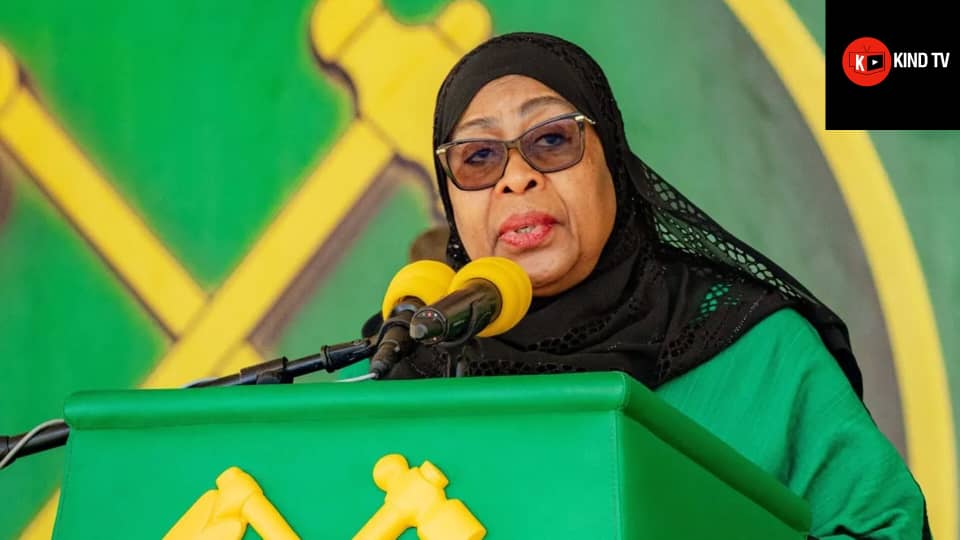
Tanzanian politics entered a new and uneasy phase this week after President Samia Suluhu Hassan’s decision to appoint her daughter, Wanu Hafidh Ameir, as Deputy Minister for Education and her son-in-law, Mohamed Omary Mchengerwa, as Minister of Health. The announcement came as she unveiled a freshly constituted cabinet following her re-election on 29 October, a cabinet that now consists of 27 ministers and 29 deputies.
The development has stirred murmurs across the region, not because the appointees lack public experience, but because their proximity to the Presidency has raised the spectra of nepotism at the highest levels of government. Wanu, a sitting member of parliament representing the Makunduchi constituency in Zanzibar, steps into national executive office for the first time. Mchengerwa, who has served in previous ministerial positions, now assumes control of one of the country’s most critical portfolios.
Behind the guarded applause at State House, there is tension. Seven senior officials were dropped from the previous cabinet, while new faces, including Ridhwani Kikwete, son of former President Jakaya Kikwete, have taken up strategic roles, pointing not only to generational transition but a tightening of the circle around the Presidency. The appointment of Khamis Musa Omar, until recently Tanzania’s ambassador to China, as Finance Minister, indicates a shift in economic stewardship at a delicate moment for the country.
President Hassan, in her remarks, urged her new team to uphold integrity and deliver results; yet the appointment of close family members has ensured that the story is no longer simply about competence, but about perception. Supporters insist the President has chosen capable hands she trusts. Detractors argue that trust alone is not enough when governance depends on public confidence.
The tasking test lies ahead. If these ministers deliver on health and education reforms, the allegations may fade into footnotes. If they falter, these appointments will be cited as evidence that the Presidency blurred the line between state duty and family loyalty. In East African politics, where power and kinship often run side by side, this latest move is being watched with more than casual interest.
Tanzanian President Under Fire After Appointing Daughter and Son-in-Law to Key Cabinet Posts.